
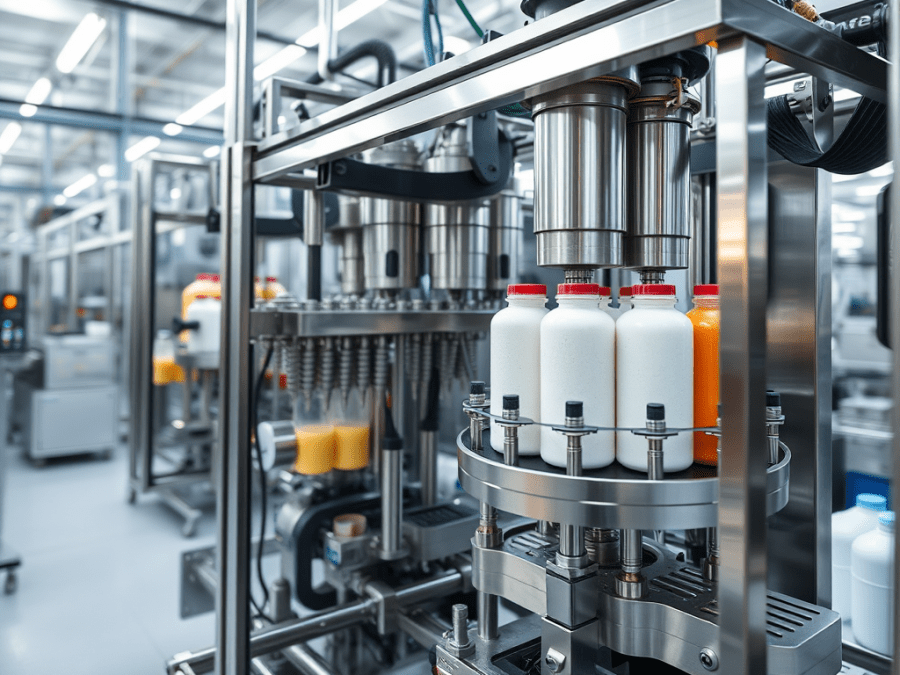
In the fast-paced world of manufacturing, industrial filling machines play a crucial role in ensuring efficiency and precision. These machines are indispensable in various industries, including food and beverage, pharmaceuticals, cosmetics, and chemicals, where they are used to fill containers with liquids, powders, or granules. The demand for high-speed, accurate, and reliable filling solutions has led to significant advancements in filling technology. This article delves into the world of industrial filling machines, exploring their types, benefits, and the key factors that contribute to optimal production.
Types of Industrial Filling Machines
Industrial filling machines come in various types, each designed to handle specific materials and container types. The most common types include liquid filling machines, powder filling machines, and granule filling machines. Liquid filling machines are further categorized into volumetric, gravimetric, and piston fillers, each offering unique advantages depending on the viscosity and nature of the liquid being filled.
Powder filling machines, on the other hand, are designed to handle free-flowing and non-free-flowing powders. These machines often use auger or cup fillers to ensure precise filling. Granule filling machines are similar to powder fillers but are specifically designed to handle larger particles, such as grains or pellets.
Choosing the right type of filling machine is crucial for optimizing production efficiency and ensuring product quality. Factors such as the nature of the product, production speed, and container type must be considered when selecting a filling machine.
Benefits of Industrial Filling Machines
Industrial filling machines offer numerous benefits that enhance production processes. One of the primary advantages is increased efficiency. These machines are capable of filling hundreds or even thousands of containers per hour, significantly reducing production time compared to manual filling methods.
Another key benefit is precision. Modern filling machines are equipped with advanced sensors and control systems that ensure accurate filling volumes, minimizing product waste and ensuring consistency across batches. This precision is particularly important in industries such as pharmaceuticals, where even slight deviations in dosage can have significant consequences.
Additionally, industrial filling machines improve workplace safety by reducing the need for manual handling of potentially hazardous materials. Automated filling processes also reduce the risk of contamination, ensuring that products meet stringent quality and safety standards.
Key Factors for Optimal Production
To achieve optimal production with industrial filling machines, several key factors must be considered. Firstly, regular maintenance and calibration of the machines are essential to ensure their accuracy and reliability. This includes routine checks of sensors, valves, and other critical components.
Secondly, operators must be adequately trained to handle the machines and troubleshoot common issues. Proper training ensures that the machines are used efficiently and safely, minimizing downtime and maximizing productivity.
Finally, selecting the right machine for the specific application is crucial. This involves considering factors such as the type of product, container size, and production volume. For more detailed insights into optimizing production with industrial filling machines, visit https://totalheadline.co.uk/industrial-filling-machines-key-factors-for-optimal-production/.
In conclusion, industrial filling machines are vital components of modern manufacturing processes. By understanding the different types of machines, their benefits, and the key factors for optimal production, businesses can enhance their efficiency, precision, and overall productivity.
 MachineHUB